still
March 6–10
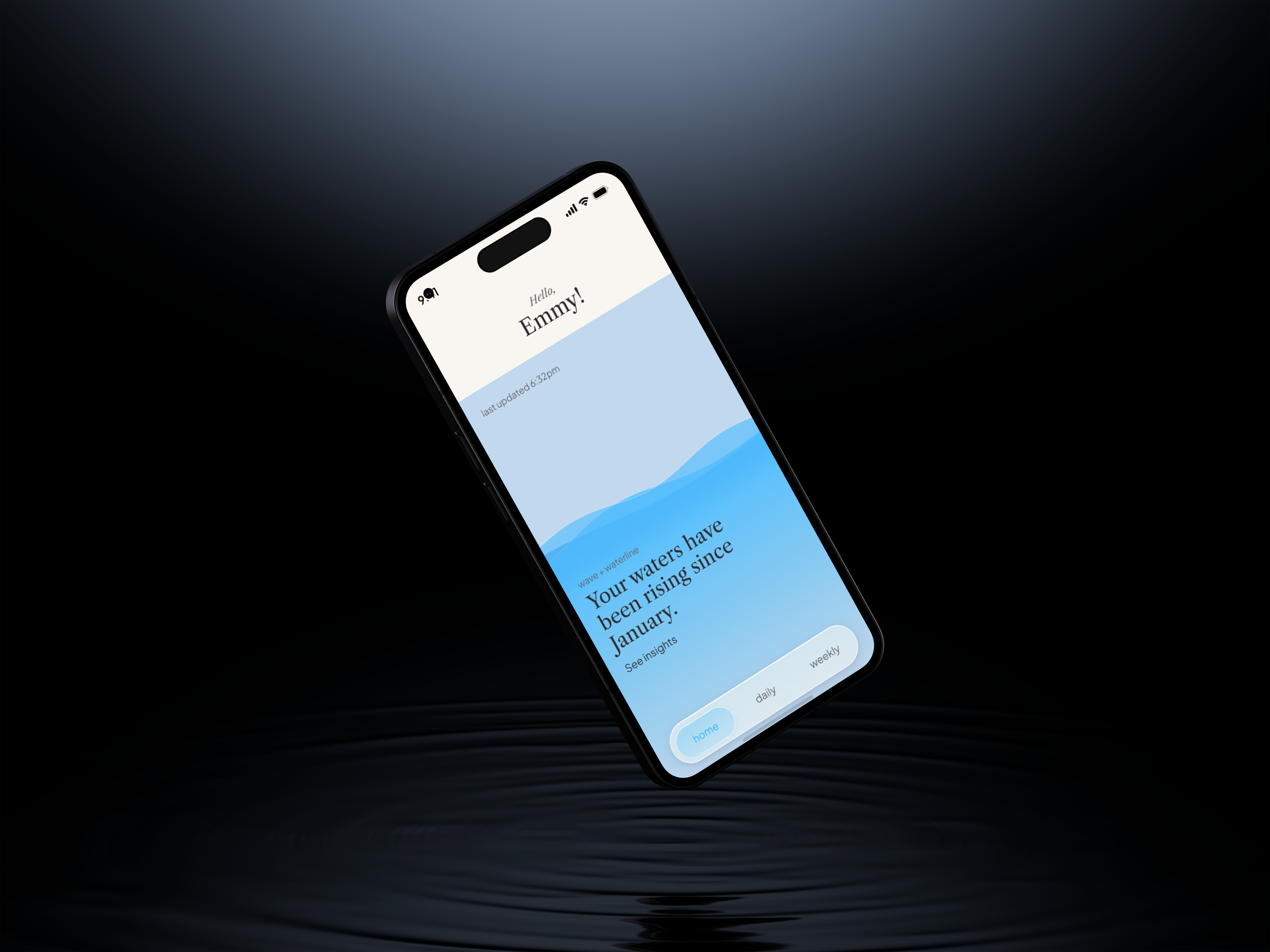
Still is a mobile and wearable concept that helps you notice stress before it becomes overwhelming. Built over the course of a 48-hour hackathon our team designed a system that uses real-time body data to guide users through moments of panic, PTSD triggers, or autistic burnout without ever forcing them to type, read heavy text, or name what they are feeling.
The hackathon brief challenged us to identify something intangible, invisible, or previously unmeasurable about human sensory experience and design a speculative tool to track and influence it in support of a wellness goal or behavioural change.
That constraint pointed us toward something specific:
How might we reveal the physiological shifts we've stopped noticing before they cause harm? What if the very defense mechanisms protecting us are also preventing us from recognizing when we need help?
Your body knows you're in crisis long before your mind figures it out.
Most mental health apps require you to log your mood or type out your feelings. During severe stress, that's exactly what you can't do. Complicated choices cause paralysis, and by the time you think to open an app, you're already too overwhelmed to use it.
1/ Calm that meets you where you are
When a stress wave hits, Still doesn't ask anything of you. Putting on your AirPods closes the surface, outside noise drops, and a visual breathing ring guides your pace without any instructions or choices.
2/ A watch face that knows when to go quiet
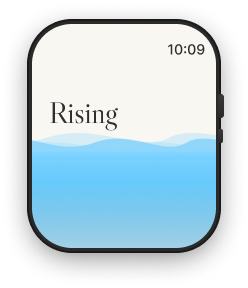
Reading options during high panic causes immediate choice paralysis, so when body metrics cross a critical threshold, the watch sheds all unnecessary information and shifts to a single high-contrast visual anchor.
3/ Reflection only when you're ready for it
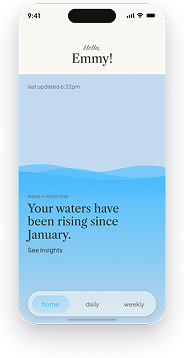
The watch handles the immediate moment while the phone holds everything else: daily notes, weekly water patterns, and trend data, all accessible only after your body has returned to baseline.
Research-Backed Principles
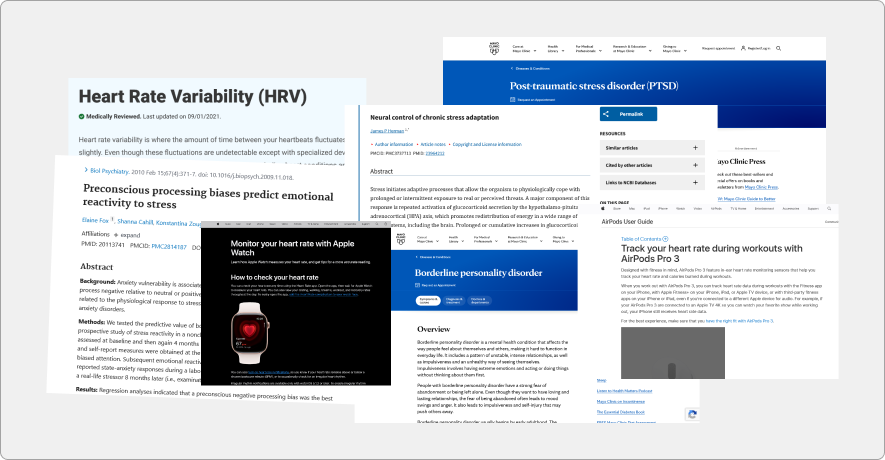
We focused our initial research on conditions like burnout, PTSD, and chronic stress to set our design parameters early. To keep the experience safe and grounding, we intentionally avoided clinical labels, scores, or gamification. We wanted every alert to feel like a gentle check-in rather than a medical diagnosis.
Tracking the Unseen
We wanted to close the gap between what your body feels and what your mind notices. Our concept focuses on the moments right before panic sets in, giving users a few critical seconds of awareness so they can ground themselves before a defense mechanism turns into automatic overwhelm.
Flows before frames
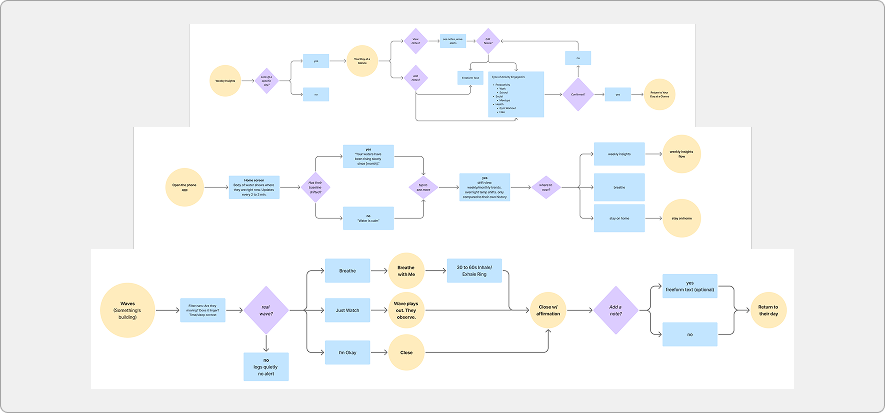
Before designing any screens, we mapped out the three core user flows: the Waves intervention, the Weekly Insights dashboard, and the Waterline home screen.
The water metaphor
To keep the experience intuitive and non-clinical, we translated all biometric data into a simple water metaphor. Waves represent sudden, acute stress spikes, while the Waterline represents your long-term baseline. This makes complex data instantly understandable at a glance.
The anti-retention principle
Most apps are built to maximize screen time, but Still is designed to make itself unnecessary. As the app notices you learning to catch your own stress waves before the watch flags them, it steps back and reduces notification frequency, trusting your internal awareness.
Radical privacy
Biometric and emotional health data is deeply personal, so your data belongs entirely to you. Still includes single-tap data deletion with no confirmation pop-ups and no guilt trips. If you want to start over, the app lets go immediately.